

is a monthly toolkit of seeds, herbal teas, and simple daily rituals designed to support the well-being of people who have menstrual or hormonal cycles.
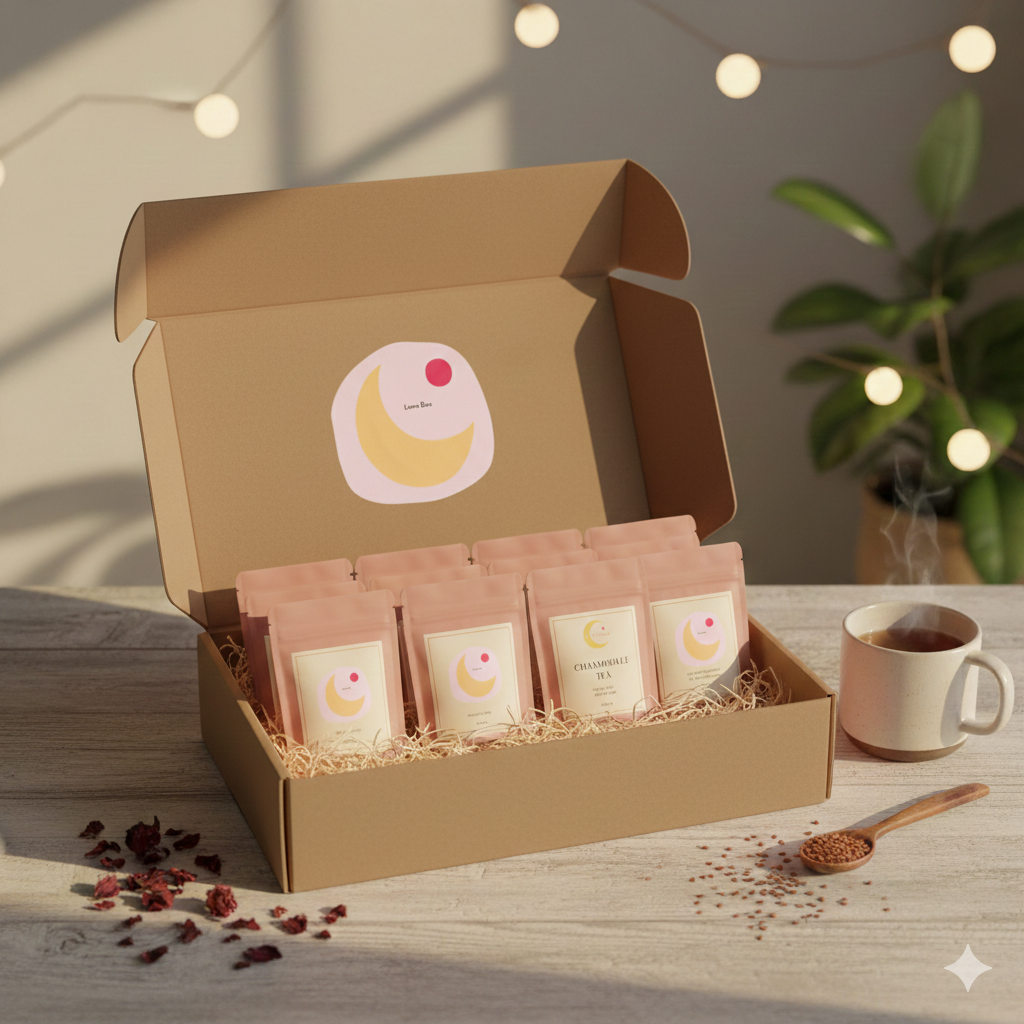
born from personal experience and hand-packed in Berlin, Luna Box offers nourishment and support for each phase of your cycle

Each Luna Box contains:
4 × seed packs (70g each of flax, pumpkin, sunflower, and sesame seeds = 280g total)
4 × tea sachets (25g each of peppermint, nettle, hibiscus, and chamomile = 100g total)
a cycle guide card that outlines the phases of the menstrual cycle, as well as the specific seeds and teas that can support each phase
these natural ingredients are all organic and vegan, with no added sweeteners
Everyone’s body is unique.
Some of us are sensitive to certain foods or herbs — especially if we experience allergies, intolerances, or digestive sensitivities (such as leaky gut).
If you are pregnant, breastfeeding, taking medication (particularly for blood pressure or diabetes), or have a medical condition, please consult a qualified healthcare professional before using these herbal products.
Luna Box is designed to support general well-being and self-care — it is not intended to diagnose, treat, cure, or prevent any disease.

FAQs
-
Luna Box is a monthly toolkit of seeds, herbal teas, and simple daily rituals designed to support the well-being of people who have menstrual or hormonal cycles.
Each Luna Box contains:
4 × seed packs (70g each of flax, pumpkin, sunflower, and sesame seeds = 280g total)
4 × tea sachets (25g each of peppermint, nettle, hibiscus, and chamomile = 100g total)
a cycle guide card that outlines the phases of the menstrual cycle, as well as the specific seeds and teas that can support each phase
-
Put simply: no! The teas and seeds included in your Luna Box are food products, not medicines. As such, they are not intended to treat, cure, or prevent any disease. If you are pregnant, breastfeeding, on medication or have any other concerns regarding your well-being, please consult a healthcare professional before using herbal products.
-
If you would like to learn more about seed cycling from a scientific perspective, you can search “seed cycling” on a scientific database (e.g. PubMed) and explore the papers that you find there, or take a look at these studies:
-
You are the best judge of whether or not Luna Box is right for you. The herbs and seeds supplied in the box are all organic and vegan, with no added sweeteners. The intention is that these can supplement and support a balanced diet and lifestyle.
The consumable items included in your Luna Box are food products, not medicines. As such, they are not intended to treat, cure, or prevent any disease. If you are pregnant, breastfeeding, on medication or have any other concerns regarding your well-being, please consult a healthcare professional before using.
How herbal teas can help
Days 1 - 5: the bleeding / early follicular phase
what to try drinking: peppermint tea
why: during this time, the goal is to soothe cramps, ease nausea, and find gentle warmth
Days 6 - 13: the follicular phase
what to try drinking: nettle tea
why: in this phase, it’s helpful to have a light lift, focus, and take in gentle nutrients which nettle tea offers in small proportions (e.g. iron and calcium)
Days 14 - 21: the ovulatory/early luteal phase
what to try drinking: hibiscus tea
why: this is the time when your cycle is at its most vibrant, and this tart tea offers a cooling pause – some studies also suggest that it may help ease water retention
Days 22 - 28: late luteal / PMS week
what to try drinking: chamomile
why: chamomile has been found to ease PMS symptoms and menstrual-related mood issues, as well as support a good night’s sleep
To learn more about these herbs from a scientific perspective, you could look at these and/or other studies:
hibiscus: https://www.sciencedirect.com/science/article/pii/S0022316622069632?via%3Dihub
peppermint: https://journals.lww.com/jnmr/fulltext/2016/21040/evaluation_of_mint_efficacy_regarding_dysmenorrhea.4.aspx
nettle: https://onlinelibrary.wiley.com/doi/10.1155/2013/857120
chamomile: https://pubmed.ncbi.nlm.nih.gov/31970017/
To learn more about seed cycling from a scientific perspective, you could look at these and/or other studies: